The ritual
The rituals around a bout
The headband, the armbands, the bow at each corner, the dance for the teacher and the reed-and-drum music: what frames a Muay Thai bout, and why.
Choose a night at the ring ↗Quick answer
Before a Muay Thai bout, fighters enter wearing a mongkhon headband and often pra jiad armbands, then perform the wai khru ram muay: they circle the ring, bow at each corner and dance a personal sequence that honours their teachers. The sarama, played on a reed pipe, a pair of klong khaek drums and the ching cymbals, accompanies it, and the music quickens once the fight begins. A produced card may stage these steps in its own way.
Why the ritual matters
Wai khru is a Thai idea found in almost every Thai performing art, from classical music and khon dance to the fighting arts. The phrase wai khru ram muay is four Thai words. Wai is the greeting made with palms pressed together, khru comes from the Sanskrit guru, meaning teacher, ram is classical-style dancing and muay is boxing. Together they translate roughly as a war dance saluting the teacher. At its core the ceremony expresses respect for authority, gratitude for knowledge and reverence for tradition, before any blow is thrown.
The mongkhon
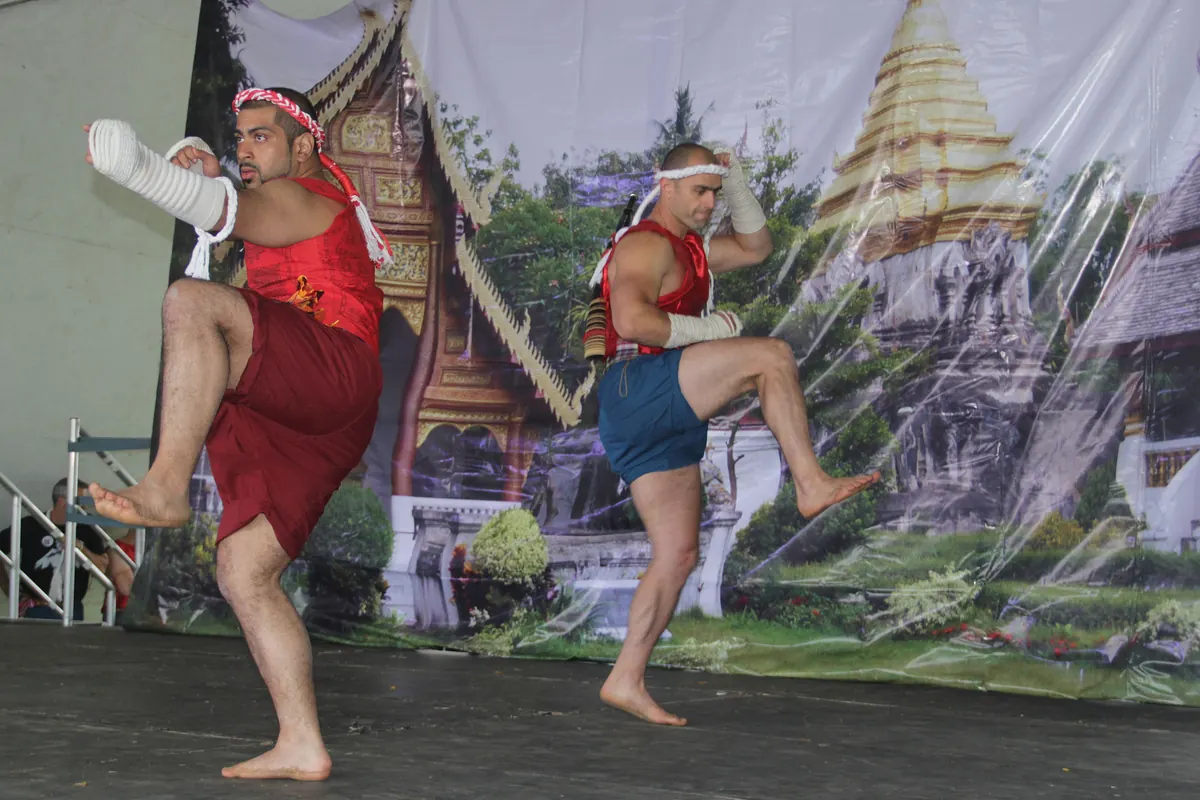
The mongkhon is the headband a fighter wears into the ring, and the word carries the sense of holy spirit, luck and protection. By tradition it comes from the trainer, who hands it over once he decides the fighter can carry the gym's name, so it is worn in tribute to the gym. When the pre-fight ritual ends, the trainer often lifts it away and sets it down in the corner as a charm. Many fighters, Buddhist or not, ask a monk to bless their mongkhon before a bout.
The pra jiad
The pra jiad is an armband tied round the upper arm. In the past it was given for confidence and luck, and was usually made by a close family member. Its origin is the battlefield: Thai warriors leaving home were given a piece of their mother's clothing, usually a sarong, and tied it round the arm so they would come home safely. Some fighters wear one, some two. Traditionally the bands were kept somewhere high, because stepping over one or dropping it was thought to take away its power.
The wai khru
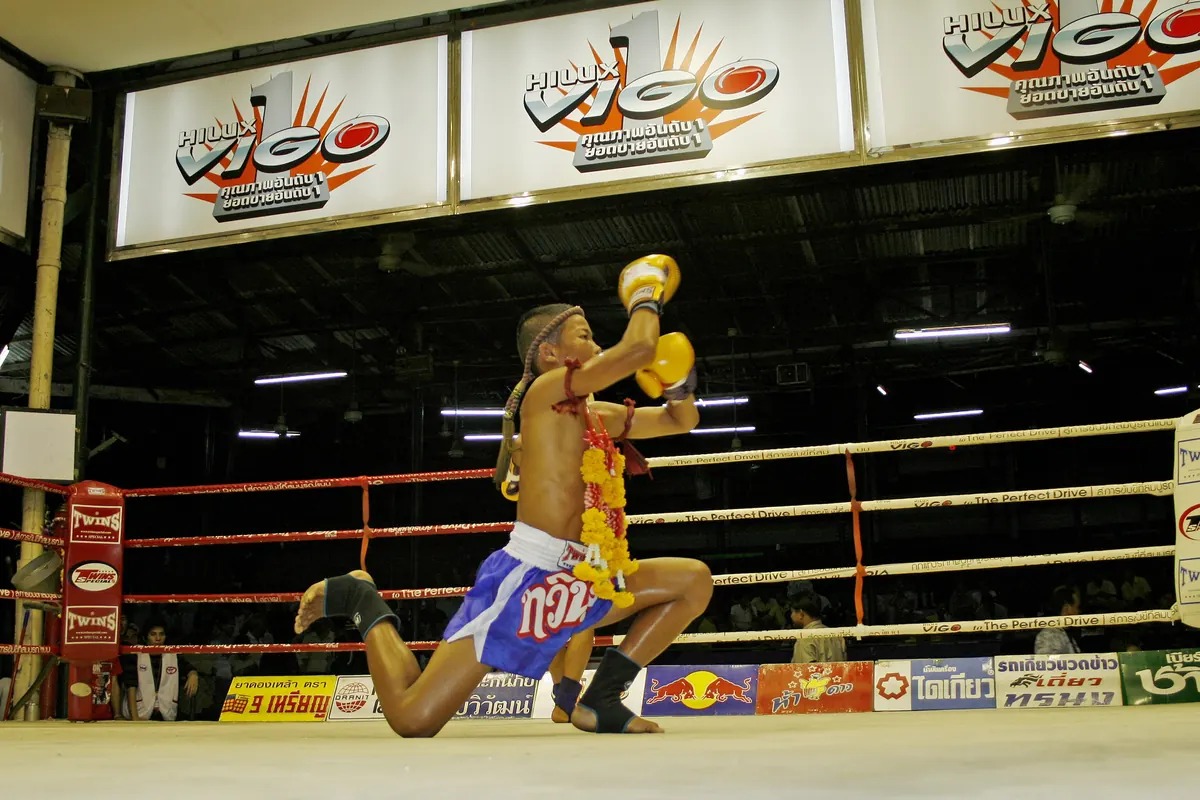
On entering the ring, fighters walk it anticlockwise, stopping in every corner to pray and bow their heads three times, saluting the Buddha, the Dharma and the Sangha. In the days when fighters performed before royalty, the ritual also paid respect to the king. For a spectator it is the calm before the bout: the crowd settles, the music slows, and each fighter takes the measure of the ring that is about to become his workplace.
The ram muay
Next comes the ram muay, a sequence of movements said to be based on Hanuman. It is personal, ranging from the very complex to the very simple, and it honours the fighter's teacher, parents and ancestors. Because the steps vary from fighter to fighter, the dance often holds clues about who trained him and where he comes from. The ram muay is always performed to music, which gives the movements their rhythm.
The sarama band
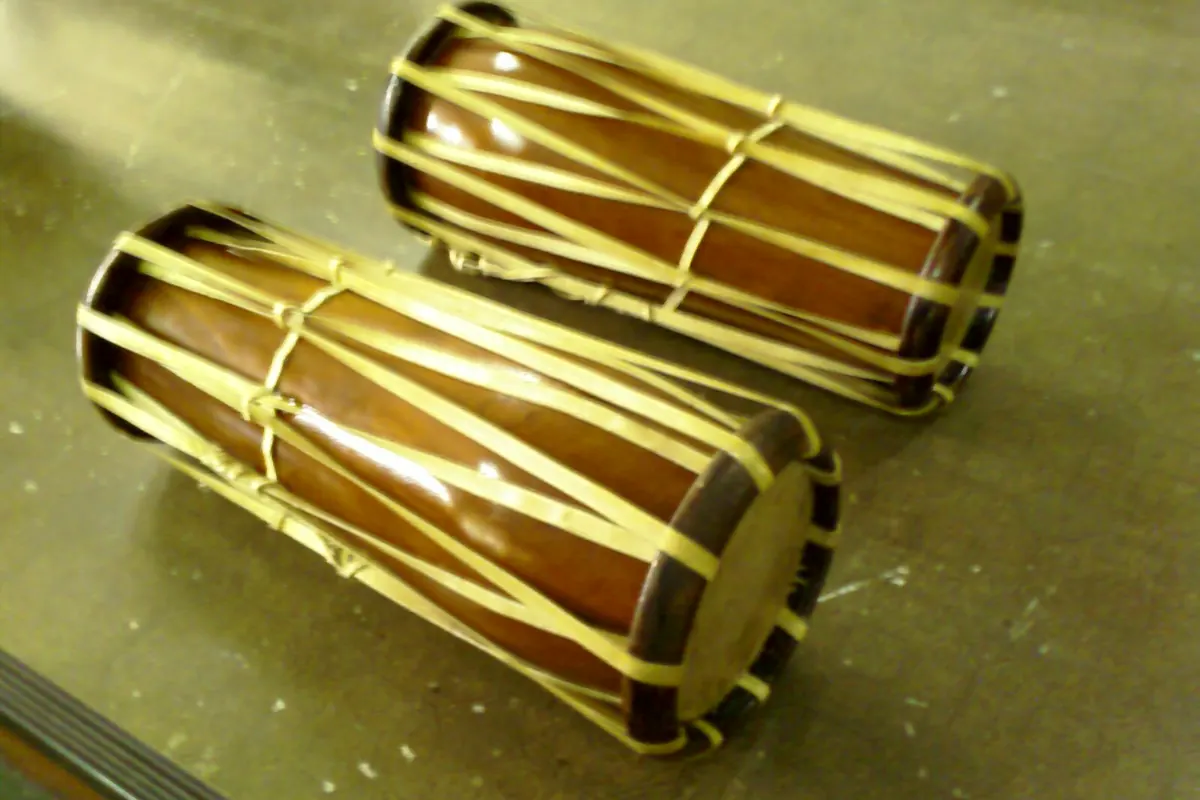
Sarama is the tune played for the pre-fight ritual; the music that carries on through the bout is called phleng muay. Up to four musicians play it. The lead is the pi, a wooden reed pipe with a quadruple reed and a flared bell. Two players beat a pair of klong khaek drums, one counted male and one female, interlocking their rhythms. A fourth keeps time on the ching, small cupped cymbals. For the ritual the pace is slow and stately; once the fight starts it climbs with the action.
What to look for on the night
On a produced card, how much of the ritual you see can vary from bout to bout. Watch the entrance for the headband and armbands, the walk round the ropes and the bow at each corner, and listen for the moment the music changes pace as the bout starts. If a trainer lifts the headband away and sets it in the corner, the ritual is over and the fight is about to begin. None of it needs explaining to enjoy, but knowing what it means makes the minutes before the bell far more interesting.
Read next: Watching your first bout
Sources